REVIEW · MOTORCYCLE CITY TOURS
Ho Chi Minh City Sightseeing & Culture Tour By Scooters
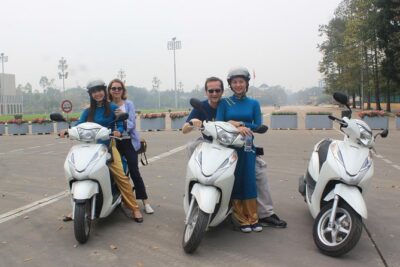
Ho Chi Minh City reveals itself best from the back of a scooter, where grand colonial buildings quickly give way to narrow alleys, old apartment blocks, flower stalls, temples, and local markets. This four-hour tour covers the familiar sights, then turns into the less polished parts of Saigon that many visitors miss.
I like the private format, which keeps the experience more personal and lets your group travel together rather than follow a large coach. I also like the mix of major history and everyday city life, from Independence Palace and the Thich Quang Duc Monument to old apartments, a wet market, coffee, and alleyways.
The main caution is pace. Eight stops in about four hours means some visits may be brief, and the public description includes both scooters and private vehicle transport, so confirm the exact riding arrangement when booking. The tour also depends on good weather.
Key points
- Eight stops in four hours: Expect a brisk route through central Ho Chi Minh City rather than long visits at each site.
- A useful mix of old and new: Colonial landmarks, war-era history, temples, apartments, markets, and the river all appear.
- Private group experience: Only your party takes part, with hotel pickup and drop-off included.
- Local touches included: Vietnamese coffee, tropical fruit juice, alleyways, a wet market, and a flower market add daily-life context.
- Several guide names appear in the operator’s feedback: Linh, Win, Ryan, Hanne, Kathy, Kim, and DA are mentioned, though your assigned guide may differ.
- Good value at $20: Transport, a helmet, drinks, and four hours of guided sightseeing make the price attractive for a first visit.
Why a Scooter Is a Smart Way to See Saigon
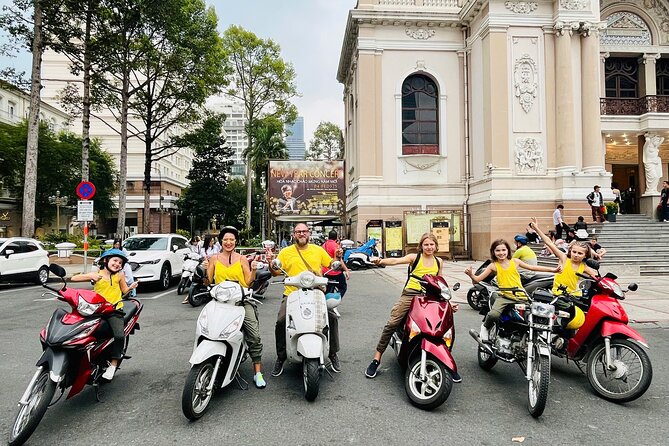
Ho Chi Minh City is not a city you understand from one quiet boulevard. The main roads are crowded, side streets change character quickly, and whole communities occupy old apartment buildings above shops and food stalls. A scooter gives you a moving view of that contrast.
You are not simply transferred from one monument to the next. The route includes central landmarks, religious sites, markets, alleys, and the riverfront. That variety matters because the city’s character is found in the spaces between the headline attractions.
The experience lasts about four hours and is private to your group. That makes it easier to ask questions, adjust the pace within reason, or tell the guide if you need a short break. Still, eight named stops is a full schedule, so you should expect an overview rather than a detailed museum visit at every location.
The price is $20 per person. For that amount, you receive transport, a helmet, hotel pickup and drop-off, Vietnamese coffee, and tropical fruit juice. I consider that strong value for a first look at Ho Chi Minh City, especially if you have limited time and want both sightseeing and local atmosphere in one outing.
More Motorcycle City Tours in Ho Chi Minh City
- Saigon: Street Food Tasting & Sightseeing Tour by Motorbike
★ 4.9 · 3,578 reviews - Ho Chi Minh City Tour by Motorbike with Female Riders | KissTour
★ 5.0 · 330 reviews - Saigon Motorbike City Tour
★ 5.0 · 48 reviews
Starting Near the Saigon Opera House
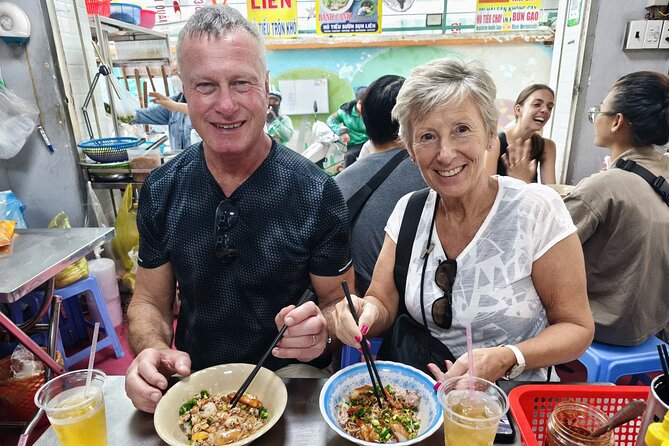
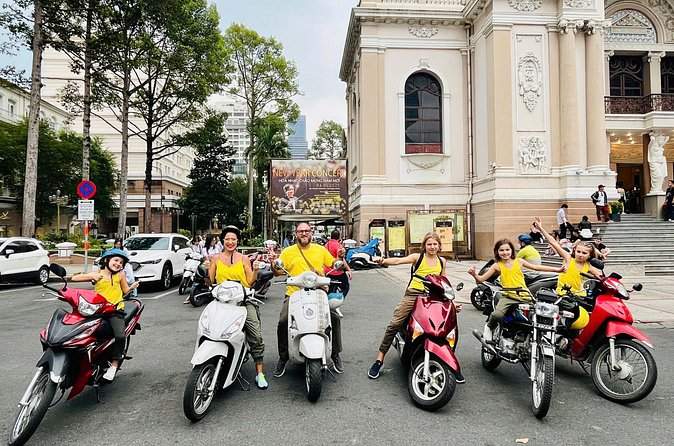
The stated meeting point is the Saigon Opera House at 07 Công trường Lam Sơn in District 1. Hotel pickup is also offered, which is useful if you are staying in the central area or would rather avoid finding the starting point in busy traffic.
The tour finishes back at the meeting point. If you use hotel pickup, confirm the return arrangement clearly so you know whether you will be dropped back at your hotel or returned to the Opera House area.
A helmet is included. The tour is suitable for most participants, and the minimum age is two years old. That does not mean every young child will enjoy four hours on the road, but the stated age policy makes this more flexible than many scooter experiences.
Stop One: Saigon Central Post Office
The Central Post Office is one of the city’s most recognizable historic buildings. It gives the tour a clear starting point, with grand architecture and a useful introduction to the old colonial center.
This stop works well early in the route because it helps you get your bearings. You can look at the building itself, then step back into the modern city outside. The drawback is that it is a major attraction, so it can feel familiar if you have already explored District 1 independently.
Expect a short sightseeing stop rather than an extended architectural study. The guide’s explanation is likely to be more useful than simply taking another photograph, so ask how the building fits into the city’s past and present.
Stop Two: Independence Palace
Independence Palace brings the country’s twentieth-century political story into the tour. It is one of the key places for understanding the end of the Vietnam War and the division between North and South Vietnam.
The value here is context. After seeing the postcard side of central Ho Chi Minh City, you move into a site tied directly to national power and conflict. Even a short visit can help explain why the city has several names and why its history remains visible in streets, monuments, and buildings.
If you want to explore the palace rooms at length, this tour may feel too quick. The schedule includes seven more stops, so treat the palace as a guided introduction rather than a full standalone palace visit.
More Motorcycle City Tours in Vietnam
- Ho Chi Minh City: Street Food & Sightseeing Tour with Local Guide
★ 5.0 · 14 reviews - Midnight City Sightseeing Experience On Motorbike in HCMC
★ 5.0 · 8 reviews - Ho Chi Minh city Sightseeing or Midnight nightlife by motorbike
★ 5.0 · 3 reviews - Ho Chi Minh City Tour on Motorbike
★ 4.5 · 2 reviews
Stop Three: Nguyen Hue Street
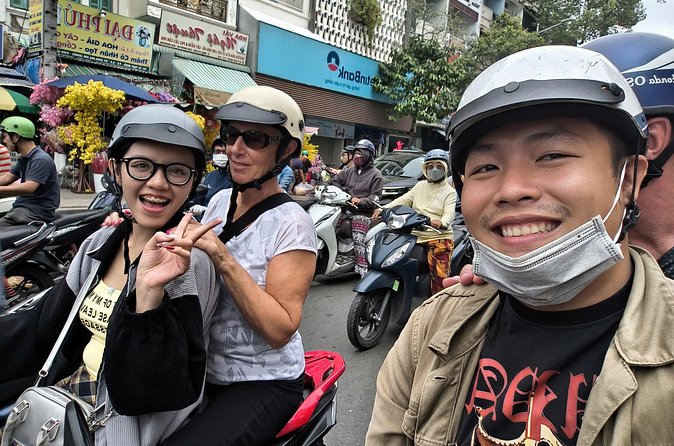
Nguyen Hue Street offers a different view of the city. This broad central promenade is a place to see modern Ho Chi Minh City at its most public and polished, with major buildings and open space in the middle of dense District 1.
The stop helps balance the older sights. You see how the city presents itself today before heading into smaller streets and older residential areas. It is also a natural place to pause for photographs.
The limitation is that a street visit depends heavily on timing and conditions. It is not a formal attraction with a fixed tour route, so the experience will be more about observation and explanation than entering a specific site.
Stop Four: Thich Quang Duc Monument
The monument to Venerable Thich Quang Duc marks one of the most painful moments in modern Vietnamese history. Thich Quang Duc was the Buddhist monk who burned himself in protest in 1963, an act that drew international attention to the political and religious tensions of the period.
This is one of the tour’s most meaningful stops because it connects a public monument with a specific human story. The site deserves a respectful pause, and a good guide can explain the event without reducing it to a quick photograph.
This stop may be emotionally heavy. It is also easy to misunderstand without background, so use the time to ask questions. The monument is not simply another sightseeing point. It is a place where the city’s political history and religious life meet.
Stop Five: Nguyen Thien Thuat Apartment Buildings

Nguyen Thien Thuat is where the tour moves away from the standard central route. The old apartment buildings show how residents have adapted older structures into active neighborhoods, with small businesses and daily routines packed into limited space.
This is the sort of stop I value most on a city tour. You get a closer look at how people live, not just how the city looks in official photographs. The buildings may appear worn, but that is part of their character and their usefulness as a window into local life.
Do not expect a restored heritage complex. The appeal is precisely that these are working residential buildings. If you prefer polished attractions, this may feel rough around the edges. If you want a more direct sense of Saigon, it is likely to be one of the most rewarding stops.
Stop Six: Ba Thien Hau Temple

Ba Thien Hau Temple introduces the Chinese-Vietnamese side of the city’s culture. It is associated with the Cantonese community and gives the route a strong religious and neighborhood focus.
The temple’s value is not only visual. It shows how different cultural traditions have shaped Ho Chi Minh City over time. The route also refers to a thousand Buddha pagoda, although the named stop is Ba Thien Hau Temple, so ask your guide how that detail fits into the visit.
As with the other stops, time may be limited. Temples reward a slower look at incense, carvings, altars, and small details. Here, you may need to choose between careful observation and keeping up with the schedule.
Stop Seven: The Secret Weapons Cellar
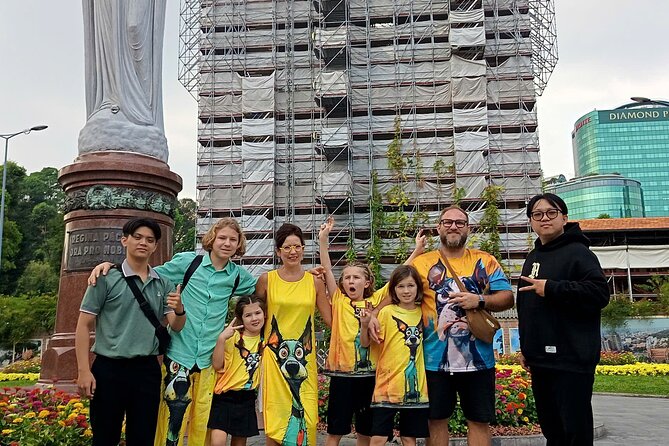
The secret weapons cellar offers another look at wartime Ho Chi Minh City. It points to the hidden network used to store weapons during the conflict, bringing the war story into an ordinary urban setting rather than placing it only in a large museum.
That change of scale is important. A cellar can make history feel close and physical. It also shows how conflict was connected to homes, alleys, and neighborhoods.
The phrase secret weapons cellar suggests a compact site, so do not expect a large underground complex. The experience depends heavily on the guide’s explanation. This is a good moment to ask about how the cellar operated and how it fit into the surrounding area.
Stop Eight: Ben Bach Dang and the Saigon River
Ben Bach Dang gives the tour a broad final view after the narrow streets and historic sites. Along the riverfront, you can see a different side of the city, with open views and a chance to pause before returning to the meeting point.
Ending near the water is sensible. It changes the pace and gives you room to think about the contrasts covered during the morning or afternoon: colonial buildings, political history, religious sites, dense apartments, hidden wartime spaces, and local streets.
The riverfront is a sightseeing stop, not a boat trip. You should expect views and a short visit rather than transport on the water.
Coffee, Fruit Juice, Markets, and Alleyways
The food and drink inclusions are modest but useful. Vietnamese coffee gives you a taste of one of the city’s everyday rituals, while tropical fruit juice provides a refreshing pause. These are small additions, yet they help keep a four-hour road-based tour comfortable.
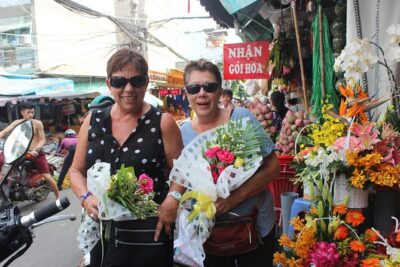
The route also highlights a wholesale flower market and a local wet market. These are not just photo stops. They show the practical side of the city, where flowers, produce, and household shopping support daily life.
The public stop list does not name the flower market or wet market as separate numbered stops, so the exact timing may vary. The same applies to the alleyway system and the thousand Buddha pagoda mentioned in the highlights. If one of these interests you most, ask the guide to confirm how much time is planned for it.
What the Guides Add
The guide can make or break a route that includes so many different subjects. The strongest comments associated with the operator praise friendly guides, clear explanations, humor, safe driving, and the ability to respond to a group’s wishes.
Names connected with the operator include Linh, Win, Ryan, Hanne, Kathy, Kim, and DA. Your guide may be someone else, and you should not assume a particular person will lead your departure. Still, the repeated emphasis on friendly personal service is encouraging.
Some published comments also describe food-focused scooter outings rather than this exact sightseeing route. That means you should treat praise for meals as background about the operator, not a promise that this tour includes a full food crawl. Here, the confirmed food and drink inclusions are Vietnamese coffee, tropical fruit juice, and light refreshments.
Timing, Comfort, and Weather
Four hours is enough to cover a lot of ground, but not enough to linger everywhere. I would choose this tour early in a Ho Chi Minh City visit, then return independently to the sites that deserve more time.
The tour requires good weather. If poor weather causes cancellation, you are offered another date or a full refund. For your own comfort, bring light clothing and keep your expectations realistic about traffic, noise, heat, and short stops.
The information describes the experience as being by scooters but also lists transport by private vehicle. That wording is worth clarifying before you pay, especially if the riding element is the main reason you are interested. The operator provides helmets, and only your group takes part.
Who Should Book This Tour?
I would recommend it to a first-time visitor who wants a quick orientation without spending the whole day inside museums. It also suits couples, families who meet the age policy, and small private groups that want a guide focused only on them.
It is particularly useful if you enjoy contrasts: famous landmarks followed by local neighborhoods, formal political history followed by religious sites, and central streets followed by alleys and old apartments.
I would hesitate if you want long, detailed visits at every stop, a full food tour, or a relaxed schedule. The route is active and broad. It gives you a strong first picture of the city, but you will need to accept that some places receive only a short visit.
The published score is 4.6 from nine ratings, though the available comments include praise for several different tour styles. I would read that figure as a positive sign about the operator’s general service, not as a precise measure of every minute of this particular route.
Should You Book It?
At $20 per person, this is a good-value introduction to Ho Chi Minh City. You receive four hours of private transport, a helmet, hotel pickup and drop-off, coffee, juice, and a route that reaches beyond the usual central landmarks.
Book it if you want efficient sightseeing, local neighborhoods, historical context, and the fun of moving through Saigon by scooter. Before booking, confirm the exact vehicle arrangement and ask how the flower market, wet market, alleyways, and pagoda fit into the day. Cancel at least 24 hours ahead for a full refund. If bad weather cancels the tour, you can choose a new date or receive a full refund.
FAQ
How long does the Ho Chi Minh City scooter tour last?
The tour lasts approximately four hours.
What is the price?
The listed price is $20 per person.
Is hotel pickup included?
Yes. Hotel pickup and drop-off are included.
Where does the tour start?
The stated meeting point is the Saigon Opera House at 07 Công trường Lam Sơn, District 1, Ho Chi Minh City.
Where does the tour finish?
The activity ends back at the meeting point.
Is this a private tour?
Yes. Only your group participates.
What refreshments are included?
Vietnamese coffee and tropical fruit juice are included as light refreshments.
Is a helmet provided?
Yes. Use of a helmet is included.
What is the minimum age?
The minimum age is two years old.
What happens if the weather is poor?
The experience requires good weather. If it is canceled because of poor weather, you can receive a full refund or choose another date.
Recently added around Ho Chi Minh City
- Visit 5 Districts & The Hidden Gems In Saigon By Motorbike★ 5.0 · 8 reviews
- Experience Saigon Cuisine: Food Tour by Motorbike or Car★ 5.0 · 7 reviews
- Saigon Homies – Street Food Tour By Motorbike/Car/Walking★ 5.0 · 3 reviews
- Street Food Tour In Ho Chi Minh City By Motorbike★ 5.0 · 2 reviews
- Saigon Half Day Shopping Tour by Motorbikes – KissTour★ 5.0 · 4 reviews
- Private Shore Excursion from Phu My Port: Food & Sights by Motorbike★ 5.0 · 10 reviews
- Ho Chi Minh city Sightseeing or Midnight nightlife by motorbike★ 5.0 · 3 reviews
- Ho Chi Minh City Street Food tour by Motorbike at night★ 5.0 · 2 reviews
Motorcycle City Tours, side by side.
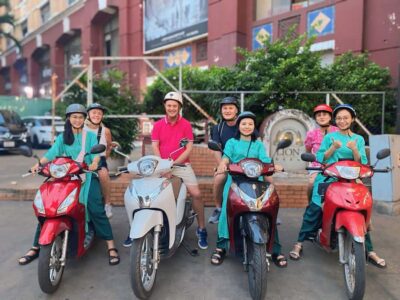
Street Food Tasting & Sightseeing Tour by Motorbike
Read our review →
Paris Vintage Private City Tour on a Sidecar Motorcycle
Read our review →
Ho Chi Minh City Tour by Motorbike with Female Riders | KissTour
Read our review →
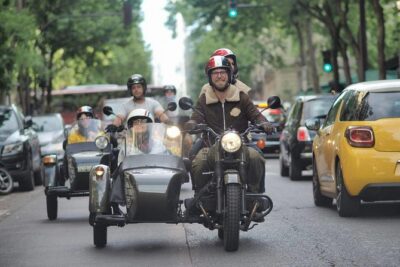
Paris Highlights city tour on a vintage Sidecar Motorcycle
Read our review →