REVIEW · TOURS
7 Day Best of Transylvania Motorcycle Tour from Cluj
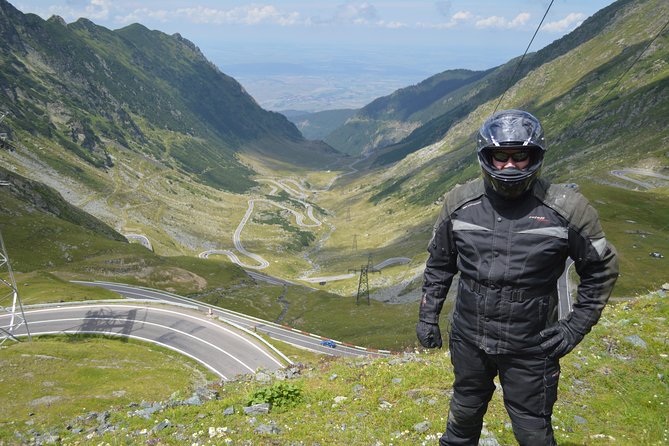
The best part of this seven-day ride is the mix: one day you are tracing Romania’s highest mountain roads, and the next you are walking through a Saxon citadel or peering into a castle tied to the Dracula story. Transfagarasan and Transalpina provide the big riding thrills, while Biertan, Sighisoara, and village stays give the trip a more human scale.
I like the careful route planning and the small group size, capped at 10 people. I also like that Alex, along with Claudia’s help, brings local guidance to the trip rather than simply handing you a motorcycle and a map. The main consideration is cost control: fuel, meals, road taxes, parking, and most entry fees come separately, and the riding days can be physically demanding.
Key points to know before you book
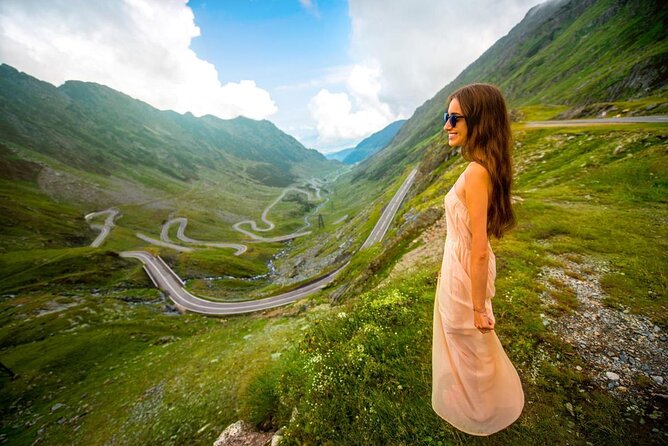
- Two of Romania’s famous mountain roads: Ride the twisting Transfagarasan and the high Transalpina, which reaches 2,145 meters at Urdele Pass.
- A strong medieval route: See Biertan, Sighisoara, Bran Castle, Rasnov Citadel, Poienari Fortress, and Alba Iulia Citadel.
- A local team: English-speaking guide Alex leads the riding, while Claudia helps with trip arrangements and guest support.
- Small-group format: The tour is limited to 10 people, making daily briefings and group riding easier to manage.
- Simple, varied lodging: Six nights include one four-star hotel, three three-star hotels, and two guest houses.
- Bring proper gear: You need a helmet, gloves, jacket, riding pants, and boots, plus a valid passport and unrestricted motorcycle license.
Why this route works so well for riders
This is not a motorcycle trip with a few sightseeing stops added on. The roads are the main event, but the castles, churches, and villages keep the week from becoming a string of bends and fuel stops.
I like the balance. You get serious mountain riding on roads built for the experience, then time to slow down and look at fortified churches, royal homes, and old citadels. The route also shows several sides of Romania: medieval Saxon settlements in Transylvania, royal Romania around Sinaia, communist-era engineering on Transfagarasan, and Orthodox religious sites farther south.
The tour is guided in English, with Spanish possible depending on the guide assigned. Daily route briefings and a general map are included. That matters on a seven-day ride, since you can spend your attention on the road instead of trying to sort out every turn yourself.
The group limit of 10 is another plus. It is large enough to share the experience, but small enough for a guide to keep track of the riders and explain the day’s route. The tour is guaranteed to depart, which helps if you are arranging flights and a longer Romanian holiday around it.
More Week-Long Rides in the world:
- Leh Ladakh Motorcycle Tour – 7 Days Of Ultimate Thrill
★ 5.0 · 17 reviews - 7 days Nepal Motorcycle tour
★ 5.0 · 12 reviews - 7-Day Tanzania Private Guide Motorcycle Safari Tour
★ 5.0 · 5 reviews
Day 1: Turda Salt Mine sets the tone
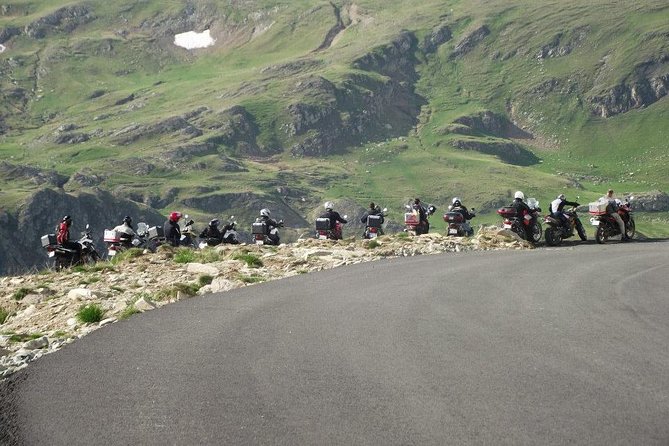
The tour begins with a transfer to Turda and a visit to Salina Turda, Romania’s famous salt mine. The city itself dates to Roman times, when it was known as Potaissa, and the mine is known for its huge underground halls named after kings and queens.
You have about an hour here, and admission is not included. That timing gives you a useful first taste of Transylvania without using up a full riding day. The mine is also a good reminder that this trip is about more than mountain roads and Dracula stories.
The practical point is the meeting location. The official start is at Adventure Motorcycle Tours and Rentals Romania in Turda, at Strada Razboieni 31, rather than directly in central Cluj. Round-trip airport transfers from Cluj are included among the tour features, so confirm the pickup details when you book.
You can bring your own motorcycle or arrange a BMW rental. Fuel is not included, and neither are meals beyond six breakfasts, so budget for those costs from the start.
Day 2: Biertan and Sighisoara bring medieval Transylvania to life
The second day moves into the fortified Saxon towns that give this part of Romania its distinctive character. Biertan’s Lutheran fortified church dates to the 12th century and is listed as a UNESCO World Heritage Site.
You have about an hour at the church. It is a short stop, but a worthwhile one if you appreciate defensive church architecture and the story of Transylvania’s German-speaking Saxon communities. Entry is not included, so carry some local currency or a payment card for the day’s paid sites.
Later, you spend about two hours in Sighisoara, another UNESCO World Heritage Site. The Clock Tower is the obvious landmark, but the real pleasure is walking through the medieval citadel and seeing the compact streets and old defensive setting.
Sighisoara is also promoted as the birthplace of Dracula, though the historical connection is to Vlad III, the ruler commonly called Vlad the Impaler. Keep your expectations sensible. This is a living historic town, not a theme park built around vampires. The Dracula label is part of the appeal, but the citadel itself is the reason to linger.
Day 3: Bran Castle and Rasnov test the Dracula story
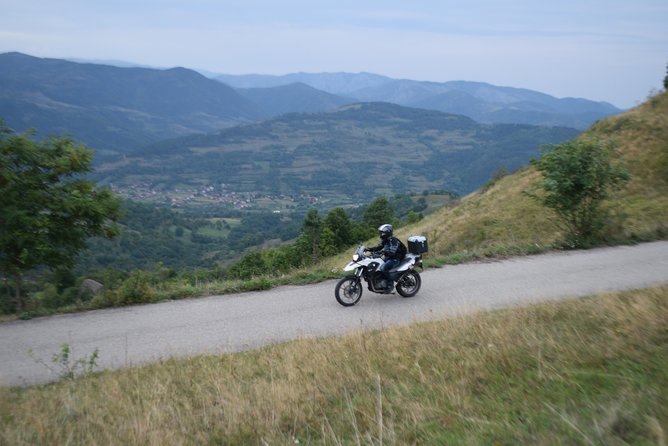
Bran Castle gets about an hour. It is widely called Dracula’s Castle and dates back to 1377, but its link to Bram Stoker’s fictional character is much stronger than its direct link to Vlad the Impaler.
That distinction is useful. If you come expecting a dark, isolated vampire fortress, you may find the reality more complicated. You do get a dramatic hilltop castle, a strong popular story, and one of Romania’s most recognizable sights. The admission fee is separate.
Rasnov Citadel follows, with another hour for the garden and panoramic view. It was built as a peasant fortification and is described as the largest medieval peasant fortification in Eastern Europe. The stop adds a different kind of fortress experience after Bran: less royal and more tied to the defensive needs of local communities.
The day combines two major attractions, so it can feel busy. If you prefer long, unhurried visits inside each site, ask how much free time is available on your departure date. The itinerary gives a useful overview, but not an entire afternoon at either castle.
More Motorcycle Tours in the world:
- Ho Chi Minh City Street Food Tour & Sightseeing By Motorbike
★ 5.0 · 9,413 reviews - Hanoi Motorbike Tour: Food, Culture and Fun by Vintage Motorbike
★ 5.0 · 6,699 reviews - Saigon By Night and Street Food By Motorbike | Opt: Ao Dai Riders
★ 5.0 · 4,066 reviews - Private Street Food Tour by Motorbike/Car with Local Students
★ 5.0 · 3,950 reviews
Day 4: Transbucegi and Peles Castle
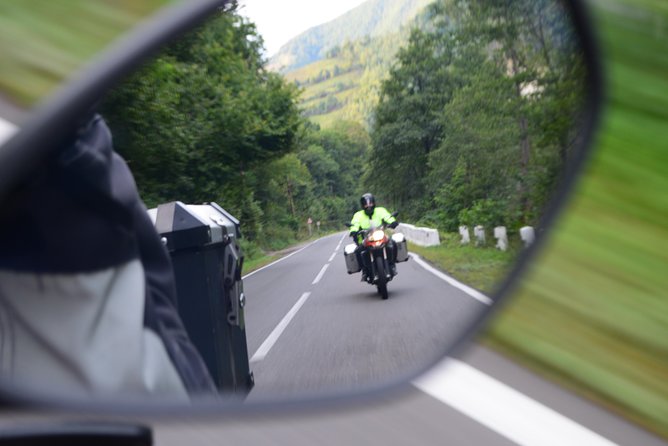
Day four turns back toward the mountains with the Transbucegi Road, also called the Babele Road. This narrow, winding road climbs to about 1,925 meters and offers some of the strongest high-altitude views on the tour.
For riders, this is a good bridge between the historic stops and the larger road challenges still ahead. The road is described as a newer mountain route, and you get about an hour in the Bucegi Mountains. The ride calls for attention, especially if you are not used to narrow mountain roads with frequent bends.
Peles Castle gives the day a change of pace. It was one of Romania’s royal residences and served as a home for much of the country’s monarchy. You have about an hour there, with admission separate.
I like this pairing because it shows two very different kinds of Romanian grandeur. Transbucegi is raw mountain riding and open views. Peles is formal, polished, and tied to the royal era. One caution: an hour at Peles may be enough for a brisk visit, but not for seeing every room if the interior is open and busy.
Day 5: Transfagarasan is the signature riding day
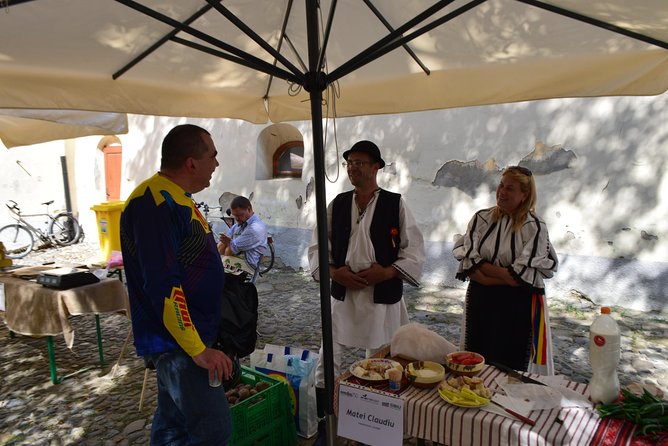
The Transfagarasan Highway is likely the road that brings many riders to this tour. Built from 1970 to 1974 as a military route under Nicolae Ceausescu, it cuts through the Carpathians with a long series of tight bends.
The route is often described as one of Europe’s most difficult and crooked roads for motorcyclists. That does not mean it is a race course. You will get the most from it by treating the road with respect, keeping a steady pace, and following the guide’s instructions.
The itinerary allows about an hour on the highway itself, though the full riding day may involve more time on the road. The listed stop is free, but fuel, parking, and other personal costs are not included.
Weather and road conditions matter greatly on high mountain routes. The tour information does not promise a particular road opening condition, so check the seasonal operating details before you pay. A route centered on high passes can be affected by conditions outside the operator’s control.
One of the most memorable details from the trip is the chance of seeing brown bears. A bear sighting is never guaranteed, and you should not stop or approach wildlife for a photograph. Still, keep your eyes open during the mountain sections and listen to the guide.
Day 6: Poienari, Curtea de Arges, and Romania’s highest road
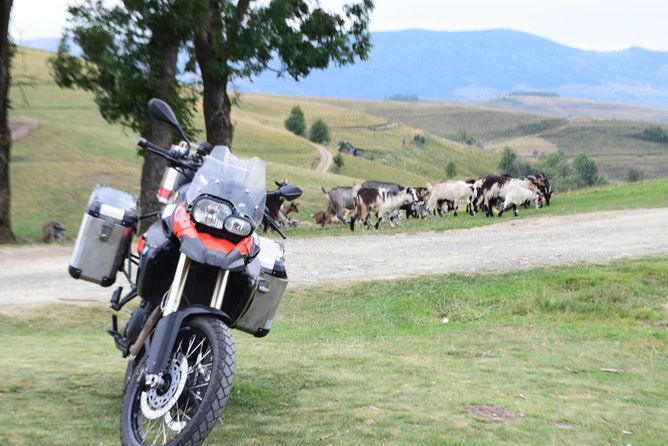
Day six is the most demanding mix of history and riding. At Poienari Fortress, you climb 1,200 steps to reach the citadel associated with Vlad the Impaler.
This is not a casual castle stop. The steps require moderate fitness, and you should save energy for the motorcycle riding that follows. The fortress is important to the Vlad story, but the climb is as much a part of the experience as the ruins at the top.
Curtea de Arges Monastery provides a quieter stop, lasting about 45 minutes. The 16th-century Byzantine cathedral is a place where religious history and local legends meet. Admission is separate, and modest clothing is a sensible choice for a church visit.
Then comes Transalpina, the highest mountain road in the Carpathians. The road reaches its highest point at Urdele Pass, 2,145 meters above sea level, and you get about two hours for this part of the route.
Transalpina and Transfagarasan offer different riding experiences. Transfagarasan is famous for its dramatic engineering and hairpin turns. Transalpina gives you a higher, more open mountain route. Together, they are the heart of the motorcycle portion of the tour.
Day 7: Alba Iulia closes the loop
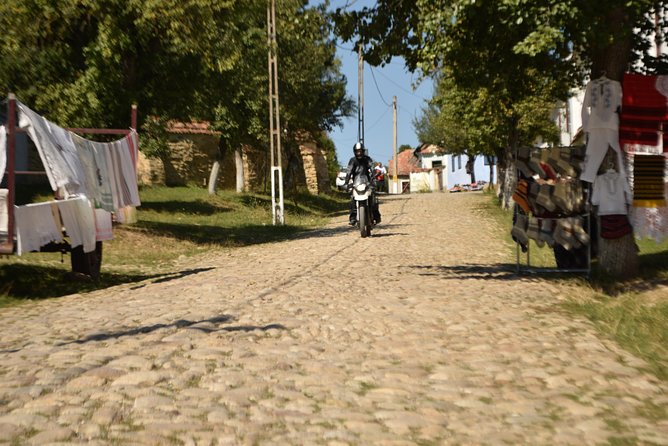
The final day brings you to Alba Iulia Citadel, a star-shaped fortress with seven bulwarks. Its design reflects the Vauban style of military fortification, and the site gives the trip a strong final look at Romania’s political and defensive past.
You have about an hour here before returning to the meeting point in Turda. The citadel visit is free according to the tour details, though individual activities or optional paid attractions may cost extra.
Ending with Alba Iulia works better than finishing only with a final transfer. You get one last historic stop and a chance to shift out of mountain-road mode before the tour ends.
Lodging, food, and what the price covers
The listed price is $1,144.09 per person. For seven days, that is a fair package if you value the guide, motorcycle route planning, accommodation, breakfast, and airport transfers. The price is less attractive if you expect a fully all-inclusive holiday.
Six nights of lodging are included:
- One night in a four-star hotel
- Three nights in three-star hotels
- Two nights in guest houses
- Six breakfasts
The mix suits a route that passes through smaller villages and historic towns. Guest houses can offer a more local feel than standardized hotels, while the three-star and four-star nights provide a bit more predictability.
You pay separately for gas, road taxes, parking, attraction tickets, lunches, dinners, drinks, personal activities, and photo or video fees where applicable. Add those costs before comparing this tour with a rental-only package.
The included route briefings are valuable. A self-guided rental can look cheaper at first, but you would need to plan the seven-day route, arrange lodging, manage navigation, and decide how to connect the roads and sights. Here, the operator has already built those pieces into one journey.
Motorcycles, fitness, and practical preparation
You can bring your own motorcycle or rent a BMW motorcycle. The supplied information does not specify the BMW models, rental rate, insurance terms, luggage setup, or deposit, so ask for those details before booking.
You must be at least 21 years old and carry a valid passport plus an unrestricted motorcycle driver’s license at departure. You also need your own protective gear: helmet, gloves, jacket, riding pants, and boots.
The tour calls for moderate physical fitness. That matters most on the 1,200-step climb at Poienari and during long days of riding on twisting roads. You should be comfortable handling a motorcycle for a full sightseeing day, then walking around castles and citadels afterward.
A vegetarian option is available if you request it at booking. Breakfast is included, but lunch and dinner are not, so tell the operator about dietary needs early and plan for meals along the route.
The tour can operate with a multilingual guide, English or Spanish. Confirm the language before departure if that affects your comfort on the road.
Who gets the most from this tour
I would choose this tour if you want the roads and the culture in equal measure. It suits riders who want a guided introduction to Romania rather than a bare motorcycle rental.
It is especially good for you if:
- You want to ride Transfagarasan and Transalpina without planning every day yourself.
- You enjoy castles, fortified churches, and old citadels.
- You prefer small groups to large coach tours.
- You are comfortable with changing accommodation and village guest houses.
- You want local help from Alex and Claudia.
- You have enough riding experience and fitness for mountain roads and the Poienari climb.
I would look elsewhere if you want a relaxed holiday with short drives, long hotel stays, and every meal included. I would also hesitate if your main goal is a slow archaeological tour, since several historic sites receive about an hour and the route keeps moving.
The strongest parts of the operation are the route, the human support, and the bikes. Alex is praised for explaining Romania and helping make the roads more than a series of turns. Claudia is praised for staying in contact, helping with arrangements, and keeping the trip organized. One especially useful detail is that the route information is supplied in a detailed format, so you are not left guessing what comes next.
Should you book the seven-day ride?
Book it if you want Romania’s best-known mountain roads with a sensible dose of castles, villages, and local food. The route is ambitious, the group is small, and the combination of guided riding and varied lodging gives you more than a standard sightseeing tour.
Before paying, confirm the motorcycle model and rental terms, pickup at Cluj, likely entry costs, and the operating dates for Transfagarasan and Transalpina. Then set aside money for fuel, meals, and admission fees.
This is a good choice for an active rider who wants a structured week and local guidance. It is not the right pick for someone seeking an all-inclusive trip or an easy, low-effort holiday. Also note that the booking is non-refundable and cannot be changed, so make sure your dates, license, gear, and fitness are all in order first.
FAQ
How long is the motorcycle tour?
The tour lasts approximately seven days and includes six nights of accommodation.
Where does the tour start and end?
It starts and ends at Adventure Motorcycle Tours and Rentals Romania, Strada Razboieni 31, Turda, Romania.
Are airport transfers included?
Round-trip airport transfers from Cluj are included among the tour features.
Can I bring my own motorcycle?
Yes. You can bring your own motorcycle or rent a BMW motorcycle.
Is motorcycle rental included in the price?
The tour information says you can rent a BMW motorcycle, but it does not state that rental is included in the listed price. Confirm the rental cost before booking.
What motorcycle gear do I need?
You need a helmet, gloves, jacket, riding pants, and boots.
What documents are required?
You need a valid passport and an unrestricted motorcycle driver’s license at the time of departure.
Are meals included?
Six breakfasts are included. Lunches, dinners, beverages, and other meals are not included.
Are attraction entry fees included?
Most listed attraction entry fees are not included. Gas, road taxes, parking, and personal activities are also separate costs.
What is the cancellation policy?
The booking is non-refundable and cannot be changed for any reason. If you cancel or request an amendment, the amount paid is not refunded.
Recently added around the world
- Motorbike adventures on a dual purpose motorbike in the Garden Route and Karoo.★ 5.0 · 3 reviews
- Visit 5 Districts & The Hidden Gems In Saigon By Motorbike★ 5.0 · 8 reviews
- Visit Villages, Terrace Rice Field with Easy Riders half day★ 5.0 · 2 reviews
- Motorcycle day tour to Rila monastery★ 5.0 · 2 reviews
- Motorcycle rental Trogir / BMW F850GS / Your own motorbike tour★ 5.0 · 2 reviews
- Visit all place in Sa Pa with easy riders★ 4.8 · 5 reviews
- Lisbon – Private Vintage Sidecar Tour to Sesimbra’s Coast★ 5.0 · 13 reviews
- Angkor Wat Bakeng Sunset by Motorcycle Private Tour★ 5.0 · 2 reviews
Tours, side by side.
Ho Chi Minh City Street Food Tour & Sightseeing By Motorbike
Read our review →
Hanoi Motorbike Tour: Food, Culture and Fun by Vintage Motorbike
Read our review →
Private Street Food Tour by Motorbike/Car with Local Students
Read our review →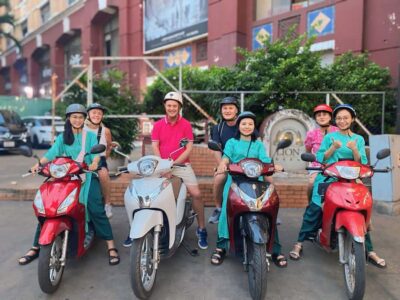
Street Food Tasting & Sightseeing Tour by Motorbike
Read our review →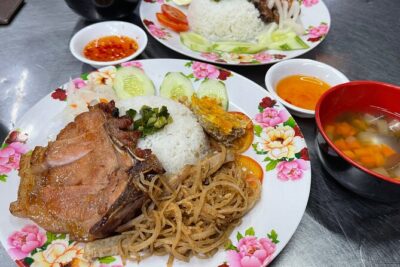
Top Notch Street Food Motorbike Tour In Ho Chi Minh City
Read our review →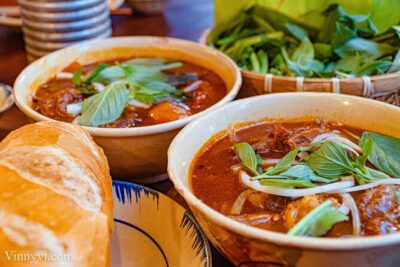
Private Street Food Motorbike Tour in Ho Chi Minh City
Read our review →
Barcelona Private Tour by Sidecar Motorcycle
Read our review →